Powering the future with the lowest cost energy storage solution
Redwood Energy
Redwood Energy designs, integrates, and deploys large-scale BESS at the lowest cost, using new and repurposed batteries.
Grid services & peak shaving
Flexible capacity for grid services and peak load management
Data center power
Fast and reliable power for AI and computing
Backup power
Consistent power during grid outages
Duration advantage
Optimized for sustained energy delivery, offering lower cost per kWh over longer durations
Low cost
By sourcing the lowest-cost domestic batteries, blending used and new, and simplifying installation and system design, we deliver the lowest-cost energy storage on the market.
Tariff-free
Our batteries are 100% domestic, avoiding import duties that can add more than 75% to new battery costs and qualifying our systems for federal incentives.
Scalable
Our architecture scales without limitation, enabling new applications at higher power and longer durations.
Technology
Pack Manager
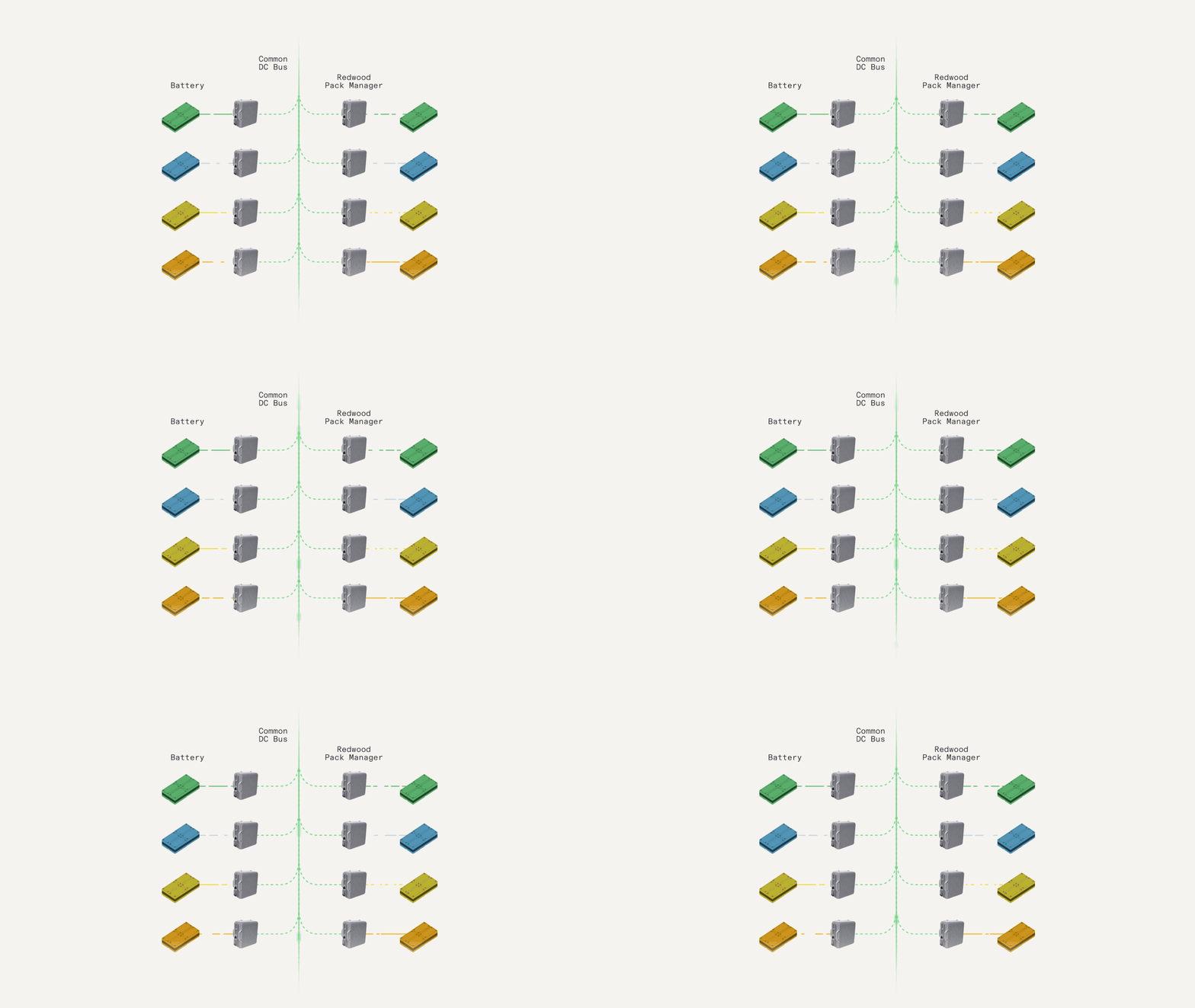
Seamless battery integration
Live monitoring systems
Real-time insight
Lifetime performance
Fixed power and energy outputs guaranteed
Technology
Pack Manager
Seamless battery integration
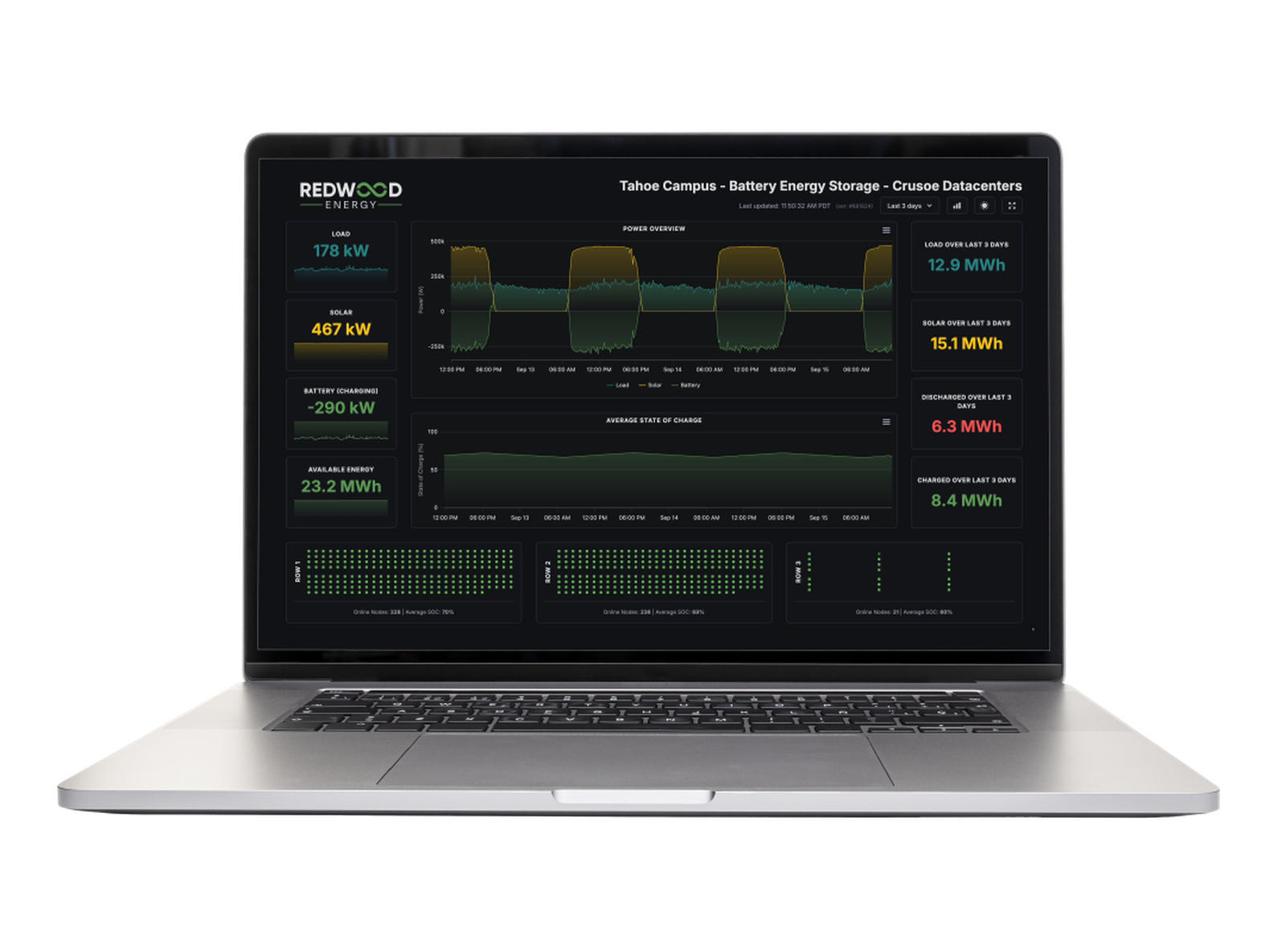
Live monitoring systems
Real-time insight
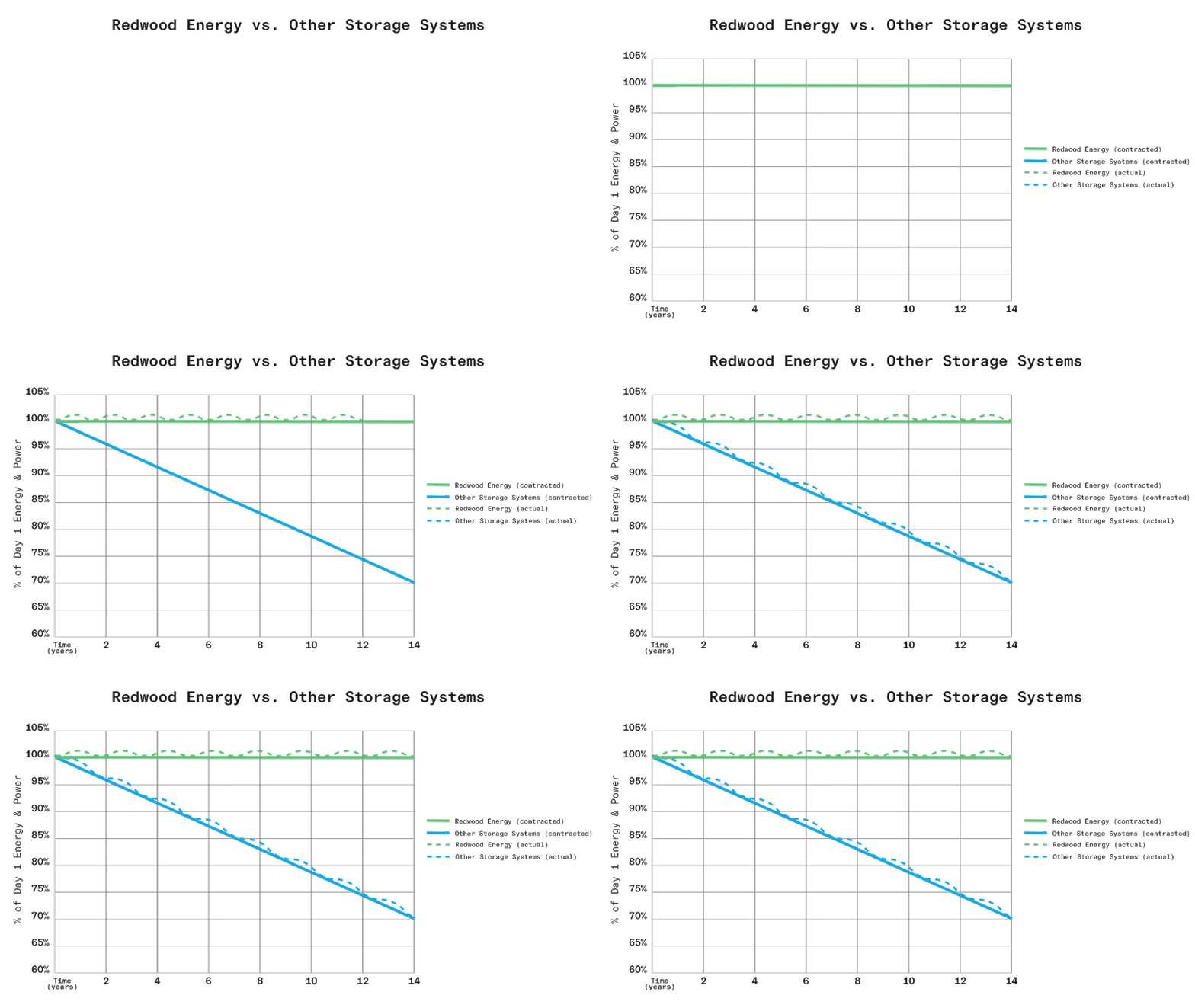
Lifetime performance
Fixed power and energy outputs guaranteed
Capacity
Today, Redwood receives over 20 GWh of batteries each year—the equivalent of 250,000 EVs—representing the majority of all lithium-ion batteries recycled in North America. By 2030, end-of-life batteries could supply more than 50% of the entire energy storage market.
Case study: Data Center Power
Redwood Energy is powering modular data centers for AI infrastructure company Crusoe at an energy cost lower than the grid. Deployed in less than 4 months, this 12 MW / 63 MWh system is the largest microgrid in North America.
Buy Redwood Storage
If you are a business or organization interested in buying energy storage, please contact us using the form.

Join us
Join the team building a resilient energy future.
FAQ
Frequently asked questions
1. What energy storage products and services does Redwood Energy offer?
Redwood Energy serves as the Battery Energy Storage System (BESS) OEM and offers a comprehensive suite of products and services:
Energy Storage Products and Services: DC Block, AC Block, Energy Management System, Commissioning, Full Turnkey EPC, Operations and Maintenance
Advanced Energy Management: Redwood can provide a next-generation EMS platform purpose-built for GW-scale powered land serving AI factories, functionally equivalent to an ISO platform. It manages battery dispatch, coordinates with on-site generation, and optimizes grid imports and exports in real time. The controls platform integrates seamlessly with on-site renewables, gas generation, and hyperscale AI loads at multi-hundred-MW to multi-GW scale.
Flexible Sales Models: Equipment Sales & Long-Term Service Agreement (guaranteeing system capacity) or Power Purchase/Tolling Agreement (selling energy or power as a service), where Redwood assumes operational responsibility and performance risk.
2. How fast can Redwood Energy's BESS be deployed?
One advantage of Redwood’s approach to BESS is speed—by preserving battery packs in their original form, we avoid much of the reengineering and permitting that slows traditional storage projects. On a typical project, PO to commissioning can be as short as 6 months.
3. Do Redwood's energy storage systems qualify for tax credits?
Yes, Redwood Energy's BESS are eligible for federal tax credits.
4. How does your energy density compare to containerized storage solutions?
The overall site footprint of a medium voltage Redwood Energy BESS including batteries, inverters, transformers, access roads, etc. is approximately 25 MWh/acre.
5. How do you integrate unique battery packs into one storage system?
The core technology behind Redwood Energy's BESS is the Pack Manager: a universal translator that enables seamless integration of any EV battery pack into a modular energy storage system that can deliver power to AI data centers, the grid, and other industrial, grid-scale applications. This enables us to be OEM, voltage, chemistry, and cell architecture agnostic and take advantage of the variety of EV packs we have and will continue to receive from the vehicle fleet in the coming years.
6. How do Redwood's energy storage systems perform over time?
By utilizing electric vehicle battery packs, we are using batteries that are overdesigned for energy storage applications. These batteries were designed for fast charge and discharge applications while having to survive 100,000 miles of trying road conditions. In energy storage systems, they operate at charging and discharging rates roughly one-tenth of their original design capacity, creating far gentler operating conditions that preserve battery health and maximize longevity.
Redwood Energy offers a capacity maintenance agreement on our BESS, ensuring fixed energy and power outputs over the life of the agreement. Our design anticipates the variable nature of second-life batteries and their replacement schedules based upon contracted cycles per year. Our modular system enables easy replacement over the life of the agreement where each pack can be replaced individually without taking the DC blocks offline.
7. How does Redwood handle battery degradation to ensure continuous performance?
Redwood actively monitors the health of every battery pack in our systems. When a pack shows signs of degradation, we replace it while the system remains online, ensuring uninterrupted performance and operations of the system. This is in contrast to traditional container solutions, which are taken offline to replace batteries or require augmenting sites in later years by adding more containers with more intensive project site construction.
8. What cell chemistries and formats are used in your energy storage systems?
Redwood Energy's BESS are chemistry- and cell form factor-agnostic, meaning we can accept a wide variety of electric vehicle battery packs. While much of the material we currently receive is NMC-based, we anticipate this mix will evolve over time as more electric vehicles with LFP battery packs reach end-of-life. Because we repurpose EV battery packs from multiple OEMs, our storage solutions include a mix of cell formats, tailored to the available feedstock and optimized through our Pack Manager technology for seamless integration and performance.
9. How do you verify that second life batteries work?
Our national logistics network recovers more than 70% of lithium-ion battery packs from across North America, which are safely stored and prepared for testing. Then, through a mechanical inspection and advanced power electronics, every battery is evaluated through Redwood’s in-house platform to determine suitability for reuse in battery energy storage systems versus recycling.
10. How do you ensure your battery energy storage systems are safe?
Our BESS are designed for safety across multiple dimensions:
Rather than concentrating battery modules in tightly packed containers, Redwood uses a passive fire prevention strategy. In the unlikely event that one pack catches fire, our solution guarantees it cannot propagate.
EV batteries are built to handle the intense demands of automotive use: rapid charging and high-power acceleration. In energy storage systems, they operate at charging and discharging rates roughly one-tenth of their original design capacity, creating far gentler operating conditions that preserve battery health and maximize longevity.
Our open-air design eliminates the need for complex HVAC systems, which greatly reduces complexity, cost, and risk of failure in cooling loops
11. What does your supply of batteries look like over the coming years?
We will have tens of GWh of battery capacity in the coming years and quadruple our supply in less than two years.
12. Where do you get the batteries from?
We source battery packs from multiple partnership channels and work with nearly every major automotive and battery OEM. Today, Redwood receives and processes over 70% of the lithium-ion batteries recycled in North America.
13. What customer applications can Redwood’s energy storage systems support?
Redwood Energy's BESS can serve multiple customer applications across diverse sectors. The same system can simultaneously provide multiple revenue streams through value stacking—combining services such as demand charge reduction, frequency regulation, renewable firming, and backup power. Some examples of customer applications include:
Data Centers: Primary long-duration storage, microgrid backbone for 24/7 islanded operation, or replacement for legacy diesel generators
Renewable Energy Projects: Balance supply and demand, support integration of intermittent wind and solar generation
Industrial Facilities: Backup power, frequency regulation, demand charge reduction through peak shaving
Utilities and Grid Operators: Grid-forming capacity, frequency regulation, transmission congestion relief
14. How are AI data centers using batteries to meet rapid power demands?
Interconnection and transmission upgrade timelines commonly extend multiple years, with an estimated 2,300 GW stuck in queues nationwide. BESS offer multiple pathways to accelerate power delivery:
Earlier Revenue Generation: Enable phased operations and revenue while infrastructure upgrades are completed
Microgrid Configuration: When paired with on-site generation, batteries allow facilities to operate entirely off-grid, either bypassing interconnection queues completely or providing bridging power while waiting for permanent grid connection
Load Management Strategies: Data centers may be able to work with utilities or grid operators to use battery systems as distributed energy solutions that provide grid flexibility, potentially enabling earlier interconnection approval by helping manage grid constraints
Redwood Energy advantages:
Systems deployed as quickly as 6 months
Significantly lower cost than conventional systems
Seamless transition to long-term roles (backup power, demand charge reduction, renewable firming) once permanent grid connection arrives